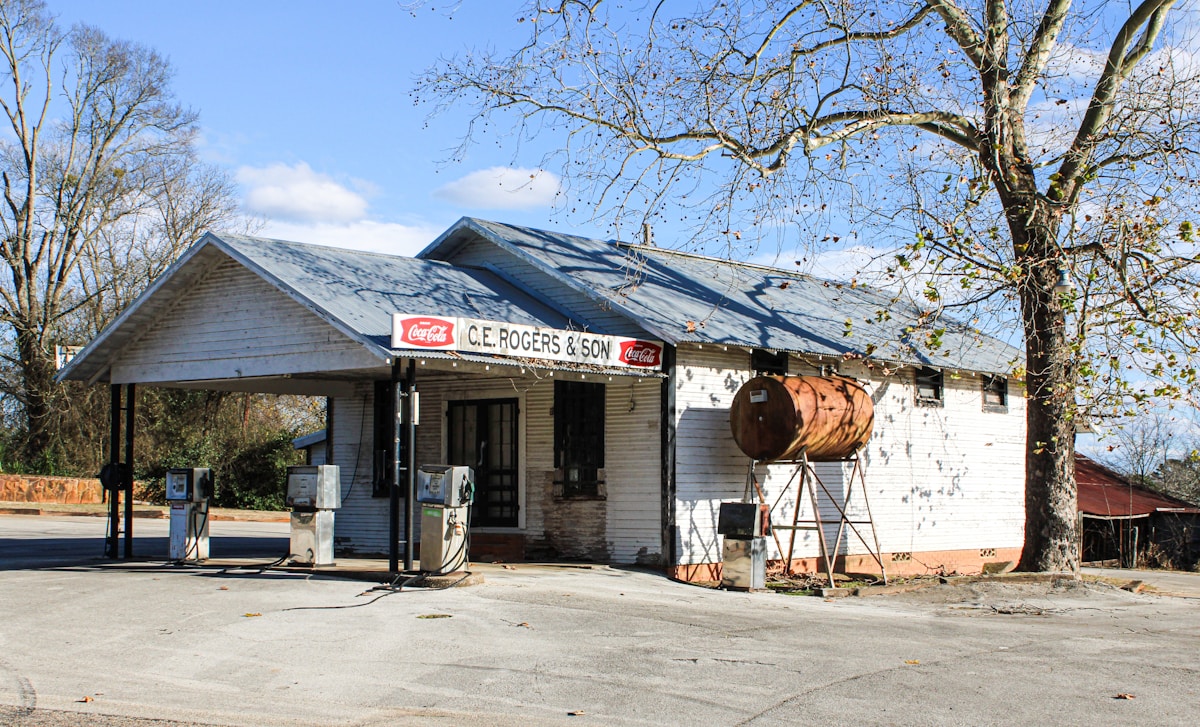
The short version: A gas station with a convenience store is one of the harder SBA 7(a) deals to fund, and the reason is not your credit. It is the underground storage tanks. Lenders who do these deals are a specific crowd: high-volume SBA shops and a couple of specialists who know how to read a Phase I environmental report and price the risk. We name six banks below that are active SBA 7(a) lenders, with real Q1 2026 call report numbers. One important caveat: the call report does not break lending out by industry, so the fuel and c-store fit notes are each bank's public reputation, not a line in a filing. We say which is which.
Why fuel deals scare off the wrong bank
You found the site. The numbers work. The inside sales are strong and the fuel volume is steady. Then you start calling banks, and the warm voice on the phone goes quiet the moment you say the words "gas station." That is not bad luck. Most banks simply do not want a property with fuel tanks buried under it, and they will pass before you finish the pitch.
SBA 7(a) money is built for exactly this kind of deal. The typical use of funds is acquiring a station along with its convenience store, often with the real estate attached. Other common uses: a fuel-brand reimage, a c-store remodel, adding a quick-service food counter or a car wash, upgrading the fuel system and the underground tanks, and refinancing existing debt. Loan sizes usually land between $1M and $5M, frequently secured by the real estate on a 25-year term. That long term and the SBA guarantee are what make the math work for both sides.
The catch is that the SBA guarantee does not erase the environmental problem. A bank still has to get comfortable with the tanks, the soil, and the brand agreement before it will lend. Banks that have done a hundred of these deals are comfortable. Banks that have done none are not, and no amount of clean financials changes that on a first call.
What lenders look for in gas station and c-store borrowers
The big risk is environmental, and it sits above everything else. Underground storage tanks mean a Phase I environmental assessment is required, and sometimes a Phase II if the first one flags anything. Contamination can sink a deal outright, no matter how good the borrower is. So the first thing a fuel lender reads is the environmental report, then the fuel volume and the inside-sales margin, then the brand and supply agreement, then the tank age and compliance record, and finally the real estate value.
After environmental, the worry list runs to economics. Fuel margins are thin and volatile, so lenders want to see how much of your profit comes from inside the store, where the real money is, versus the pump. Branded versus unbranded supply matters, because it changes your cost and your foot traffic. And the property is single-purpose, which means if the deal goes bad the bank is holding a building that is hard to sell as anything but another gas station.
There is one more thing fuel lenders never skip. A lot of station sales are cash, so they scrutinize reported sales hard. If your tax returns show one number and your point-of-sale system shows another, the deal stalls right there. The pitfalls that kill these loans are predictable: environmental contamination, unverifiable cash sales, aging tanks, and a borrower leaning too hard on fuel margin instead of inside sales.
Six banks that actually fund fuel and c-store deals
Here are six banks worth your first calls. The call report figures below (assets, C&I share, CRE share, equity-to-assets) are real Q1 2026 FFIEC data, presented as filed. The fuel and c-store fit notes are different: they reflect each bank's public lending reputation, because the call report does not break out loans by industry and cannot tell you which bank funds gas stations. Read the numbers as fact and the fit as informed reputation.
Live Oak Banking Company (Wilmington, NC)
Assets: $15.2B · C&I share: 37.1% · CRE share: 46.3% · Equity/assets: 7.7%
Live Oak has been the largest SBA 7(a) lender by dollar volume for years, and its book is built around specific industries rather than a general small-business pool. It runs a fuel and convenience-store vertical with dedicated bankers, which means the person on the phone has likely closed deals just like yours and already knows what a clean Phase I looks like. ROA was 0.89% and NIM 3.19% in Q1 2026, a steady profile for a bank that lends on appetite, not branch proximity.
Celtic Bank Corporation (Salt Lake City, UT)
Assets: $5.0B · C&I share: 45.9% · CRE share: 45.3% · Equity/assets: 17.9%
Celtic is a top-five SBA 7(a) lender and unusually well capitalized, with equity at nearly 18% of assets. That capital cushion matters for single-purpose commercial deals, which is the category a gas station falls into. ROA was a striking 3.29% and NIM 5.90% in Q1 2026. The bank lends nationwide and is comfortable underwriting the kind of specialized property that makes a generalist nervous.
Byline Bank (Chicago, IL)
Assets: $9.9B · C&I share: 31.1% · CRE share: 45.5% · Equity/assets: 13.9%
Byline is a top-tier SBA 7(a) lender with a national small-business group, so it sees fuel and c-store deals as part of its regular flow rather than a one-off it has to puzzle through. Capital is solid at 13.9% equity-to-assets, ROA was 1.64%, and NIM 4.21%. A bank with a built-out SBA group is a bank that has an environmental playbook ready, which is exactly what a station deal needs.
Newtek Bank, N.A. (Miami, FL)
Assets: $2.2B · C&I share: 39.6% · CRE share: 49.5% · Equity/assets: 8.4%
Newtek Bank is NewtekOne's bank, and it is a high-volume SBA 7(a) originator across a wide range of industries. The standout figure is profitability: ROA of 4.15% in Q1 2026, with NIM at 4.19%. A high-volume shop tends to move faster and is less likely to balk at an unusual property, which works in a station borrower's favor when the clock is running on a purchase contract.
Stearns Bank, N.A. (St. Cloud, MN)
Assets: $3.3B · C&I share: 51.3% · CRE share: 39.8% · Equity/assets: 16.1%
Stearns is an SBA and equipment-finance specialist, and it carries the most commercial-tilted book on this list at 51.3% C&I share. Capital is strong at 16.1%, ROA was 2.10%, and NIM a healthy 5.61%. The equipment-finance side is a quiet plus for station owners, since fuel-system and tank upgrades often involve financeable equipment alongside the real estate.
Huntington National Bank (Columbus, OH)
Assets: $284.1B · C&I share: 28.1% · CRE share: 20.3% · Equity/assets: 11.7%
Huntington is a top SBA 7(a) lender by loan count, which tells you it is a high-volume shop comfortable with smaller deals that a typical $284B bank might wave off. ROA was 0.99% and NIM 3.12% in Q1 2026. The C&I and CRE shares are lower here than at the specialists, which is what you would expect from a big diversified bank, but the SBA machinery is real and the loan-count reputation is the reason it earns a spot.
How to get a yes faster
The fastest path to a yes on a fuel deal is to remove the lender's biggest fear before they have to ask. That means walking in with the environmental question already answered, the cash-sales question already documented, and the tank question already settled. A station borrower who shows up with all three is rare, and rare borrowers get the banker's attention. If you also run a quick set of numbers first with our SBA loan calculator and check your coverage with the DSCR calculator, you arrive sounding like a borrower who has done the homework.
A few outreach moves that move a fuel deal along:
- Have a clean Phase I ready, or at least ordered, before the first call. It signals you understand the deal and shortens the lender's diligence.
- Show your inside-sales margins, not just fuel volume. Lenders fund the store, and the store is where the margin lives.
- Document tank age and compliance so the bank does not have to chase it down.
- Ask for the SBA team by name, not the general commercial line, and lead with the fact that this is a fuel and c-store deal so you reach someone who handles them.
Reach two of these banks in parallel, not all six. Two engaged SBA bankers create real tension on your terms and keep the deal moving. Six half-started files just multiply your paperwork and your credit inquiries, and that is the opposite of fast.
The six banks above are a strong starting shortlist, not your ranked list. The bank most likely to fund a station at your size and environmental profile depends on inputs the call report does not carry. That is what the $49 Borrower Assist PDF builds: a prioritized phone-call order scored against your specific deal, so you call the highest-probability lender first.
Photo by Ronald Crow on Unsplash. Bank figures from FFIEC call reports for the quarter ending March 31, 2026; SBA-vertical and industry-appetite notes reflect each lender's public lending reputation, not the call report.